
:

    • All Advice and support

      Start your business

      • All Start your business
      • Legislation
      • Measure your progress
      • Pricing strategies
      • Set up a business

      Improve your business

      • All Improve your business
      • Create an inclusive business
      • Deliver a quality experience
      • Partner support opportunities
      • Understand your customers

      Grow your business

      • All Grow your business
      • Funding opportunities
      • Online booking systems
      • Reach new markets
      • Sell with travel partners

      Promote your business

      • All Promote your business
      • Create good content
      • Manage your social media
      • Manage your website
      • Marketing opportunities

      Sustainability

      • All Sustainability
      • Create a climate action plan
      • Improve your sustainability
      • Measure your climate impact
      • Net zero and sustainability
      • Promote responsible tourism

      Support by sector

      • All Support by sector
      • Accommodation
      • Active and outdoor
      • Events and festivals
      • Food and drink
      • Visitor attractions
  • Training and events
  • Contact us
  1. Home
  2. Advice and support
  3. Support by sector
  4. Events and festivals
  5. Readiness and Resilience for Events

Readiness and Resilience for Events

7 minute read

Contingency planning is about having a Plan B and being ready to implement it. It helps you prepare for a range of disruptions that could temporarily or permanently affect your event. These disruptions could impact the enjoyment of your attendees and therefore your reputation if you plan to run more events in future. 

As the event organiser, you must be ready to respond to incidents that affect health and safety, reputation, or the general running of your event. Incidents could include medical emergencies, acts or threats of terrorism, extreme weather, cyber attacks, financial issues or infrastructure failure. 

In this article:

  • Event contingency planning
  • Scenarios to consider
  • Insurance
  • Operational communications
  • Exercising and test events

Event contingency planning

Visitors enjoying Highland Games

Crowds at the Cowal Highland Gathering

© VisitScotland/Kenny Lam

Contingency plans should identify risks and outline mitigation strategies. These may not always require emergency service intervention. 

Emergency planning focuses on immediate, life-threatening situations that require a coordinated response by emergency services and agencies. 

Document the risks specific to your event and how you’ll respond to them. Include protocols and recovery actions which may help limit negative financial, operational or reputational impacts. 

Some large-scale or high risk events may require working with the local authority to develop a detailed and complimentary contingency plan that aligns with the authority's wider civil contingencies plans.

Further guidance: 

  • Purple Guide to Health, Safety and Welfare at Outdoor Events (subscription required) 
  • Guide to Safety at Sports Grounds (Green Guide) – SGSA (fee required to access)
  • HSE – Planning for Incidents and Emergencies 
Scenarios to consider

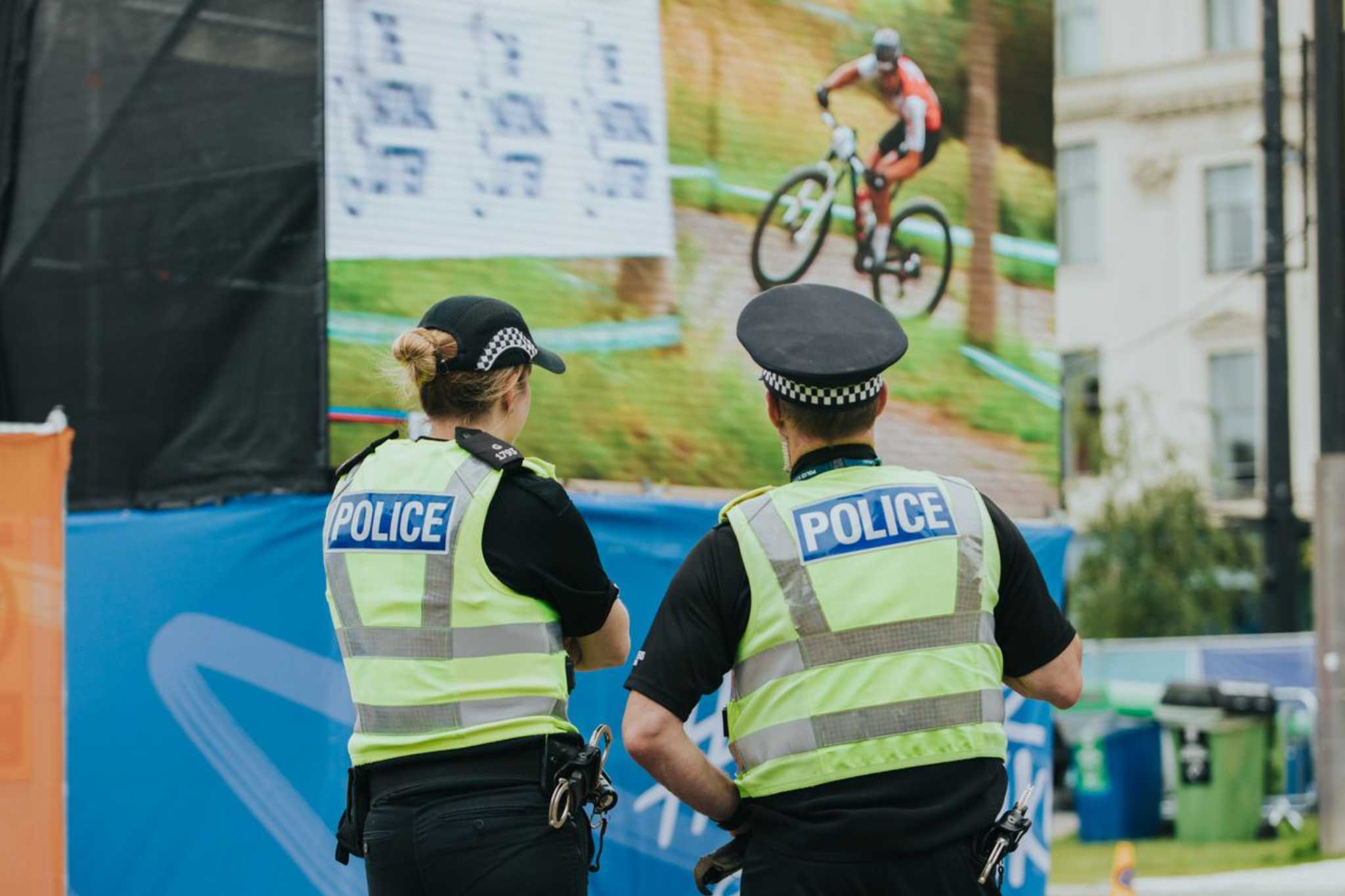
Police at 2023 UCI Cycling World Championships

© 2023 UCI Cycling World Championships

Counter terrorism 

Unfortunately events in the UK have been targeted by terrorists in the past.  The UK's current terrorism threat level is set by the Joint Terrorism Analysis Centre and can change based on intelligence. This level informs how proportionate your response should be. 

Visit: Terrorism threat levels – GOV.UK 

ProtectUK provides guidance, e-learning and tools for organisations to reduce vulnerability and strengthen protective measures. 

Visit: ProtectUK 

The counter terrorism chapter of the Purple Guide was created with support from the National Counter Terrorism Security office. Visit The Purple Guide for more guidance (subscription required).  

Martyn’s Law, officially the Terrorism (Protection of Premises) Act 2025, will make it a legal requirement for venues and events to consider and reduce the risk of terrorism. The Act was passed in Parliament on 3 April 2025, and there will be an implementation period of at least 24 months. For more information visit:

Martyn's Law leaflet – ProtectUK 

Martyn’s Law explainer video – ProtectUK  

Mythbuster document – ProtectUK 

To further support event organisers and venues prepare for Martyn’s Law, the Home Office launched a set of practical resources (February 2026). These include: 

  • Infographic on premises scope 
  • Infographic on events scope 
  • Top tips document 

For larger scale events, for example those subject to the Safety Advisory Group process, Police Scotland may assign a specialist Security Co-ordinator (CT SecCo) to support planning where required. This officer is trained in assessing risk and proposing mitigating actions in relation to counter-terrorism.  


The Belladrum Tartan Heart Festival

Inclement weather 

Weather is a major factor for events in Scotland - even indoor events can be impacted by travel disruption and adverse conditions. 

Consider all weather types and build responses into your event management and contingency plans. This is increasingly important in the context of climate change. 

Your risk management plan should identify key risks such as inclement weather and the mitigating actions you will take to prevent or reduce the severity of their impacts. An example of this might be high winds which could delay your installation of infrastructure during the build phase or may force temporary show stop or full cancellation of the event.   

Other weather-related risks to consider 

  • Lightning strikes 
  • Flooding 
  • Snow and ice 
  • Fog and poor visibility 
  • Heatwaves and sun exposure 

You may want to: 

  • Source historical weather data for your event location 
  • Schedule around typical weather patterns 
  • Commission site-specific forecasts or consult a meteorologist 

If you have weather-related insurance, you may need a loss adjuster on site. Insurers may agree to cover costs to help avoid cancellation (eg paying for trackway to protect saturated ground). 

For more guidance, see the Purple Guide chapter on "Coping with the Weather" and Event management – meteorological services – Met Office. 

Insurance

The Tall Ships Races 2025

Insurance may help reduce the financial impact and support recovery of costs if a well-planned event faces challenges. 

Work with a broker or specialist insurer to tailor your coverage. Secure quotes early so you can factor premiums into your budget and meet contractual requirements with funders or  suppliers who may require proof of cover. 

Types of insurance to consider: 

  • Public Liability (PL): protects against injury or property damage claims from third parties. This isn’t legally required, but is strongly recommended – many venues and partners will want to know this is place before they will work with you. 
  • Employer’s Liability (EL): legally required if you have staff or volunteers. Subcontractors should have their own version and provide you with proof of their cover. 
  • Professional Indemnity (PI): covers claims arising from professional advice or mistakes. This can be useful if your event includes advisory or consultancy services. 
  • Equipment: covers owned or hired-in kit for damage, loss or theft at the event and in transit. 
  • Cancellation: offers protection if your event can’t go ahead (eg due to weather) and may cover mitigation activities such as hiring additional equipment. 
  • Non-Appearance: covers losses if a key act or attraction fails to appear. 
  • Vehicle Insurance: required if your event uses road vehicles or plant machinery. Rental companies may include insurance, but ensure it meets your needs. This insurance can be expensive and hard to obtain, so start exploring options early. To comply with insurance, drivers of large vehicles may need Certificate of Professional Competence (CPC) training or to comply with tachograph rules. 

Note: 

  • Some insurance providers offer extra cover eg for terrorism, communicable disease, national mourning and cash-on-site. 

Refer to the Purple Guide chapter on insurance for more detail, and seek tailored advice if needed. 

Operational communications

The Belladrum Tartan Heart Festival

Strong communication is vital before, during and after an event. Document how you’ll communicate with stakeholders and what tools you’ll use in different situations. 

Typical tools include: 

  • Mobile phones, landlines, radios, emails 
  • File sharing systems 
  • Digital radios, PA systems, CCTV 
  • Variable message signs and LED screens 
  • Incident management software 

For larger events, additional infrastructure may be needed – such as satellite communications , radio repeaters or boosted mobile coverage. 

Test your communication systems beforehand. Consider: 

  • Training staff on radio protocols 
  • Testing for radio interference and range 
  • Secure document handling and the risk of cyber-attacks (see NCSC – What is Cyber Security?) 
  • Tabletop testing of your crisis communications 

Event control / Multi-Agency Control Centres (MACC) 

For large or complex events, you may require an Event Control facility or MACC, where emergency services and agencies are co-located with organisers to coordinate real-time decisions. 

Having visual oversight (eg a room overlooking the venue or access to CCTV) can help increase your awareness of any situations in addition to operational staff reporting from the ground.

Exercising and test events

An effective way to check how prepared you are, and the robustness of your event’s contingency plans, is through exercises that test your plans in a range of scenarios.  

Tabletop exercises are often delivered in advance of major events which bring together the joint agencies to ensure the plans that have been drafted are robust and to iron out any issues or strengthen procedures before the event. 

 For more guidance and ideas on scenarios that you could test visit: 

  • Exercise Guidance | Ready Scotland 
  • Exercise planning - SGSA 
  • Tabletop exercises - NCSC.GOV.UK  

It may also be helpful to run test events, for example where the field of play for sport competitions is being used for the first time. This can help to identify any operational issues ahead of the main event. 

Contingency planning case study

Claire Miller from the City of Edinburgh Council explains how to put contingency planning into action. Drawing on her experience supporting hundreds of events each year, this case study explores key learnings around risk management, multi-agency working, emergency preparedness and testing plans to help organisers deliver ready and resilient events.

Read expert advice on contingency planning.

Related pages

Events health and safety

Find out more about legislation for organising an event in Scotland including licensing, permissions, insurance, policing and more.
Article
7 minute read

Events and festivals

Create a responsible and successful event with a range of tailored advice and resources developed by EventScotland.

Inclusive and accessible events

Find out more about the importance of social inclusion and how you can make your event more accessible and enjoyable for all.
Article
5 minute read

Environmentally responsible events

Find tips and resources to help your event on its environmental sustainability journey.
Article
5 minute read

Sign up for the latest advice

Sign up for the Business Support monthly newsletter to get the latest advice and tips straight to your inbox. We’ll keep you informed with up-to-date insights, case studies and best practice guides to help you start, improve or grow your business.
Get the Business Support newsletter

About us

  • Policies
  • Accessibility
  • Cookies
  • Website feedback
  • Glossary of terms

Our other sites

  • Business Events
  • Corporate
  • Asset Library
  • Travel Trade
  • Scotland is Now
  • VisitScotland.com

Find us on

Find us on

Brand Scotland

© 2026 VisitScotland. All rights reserved.