



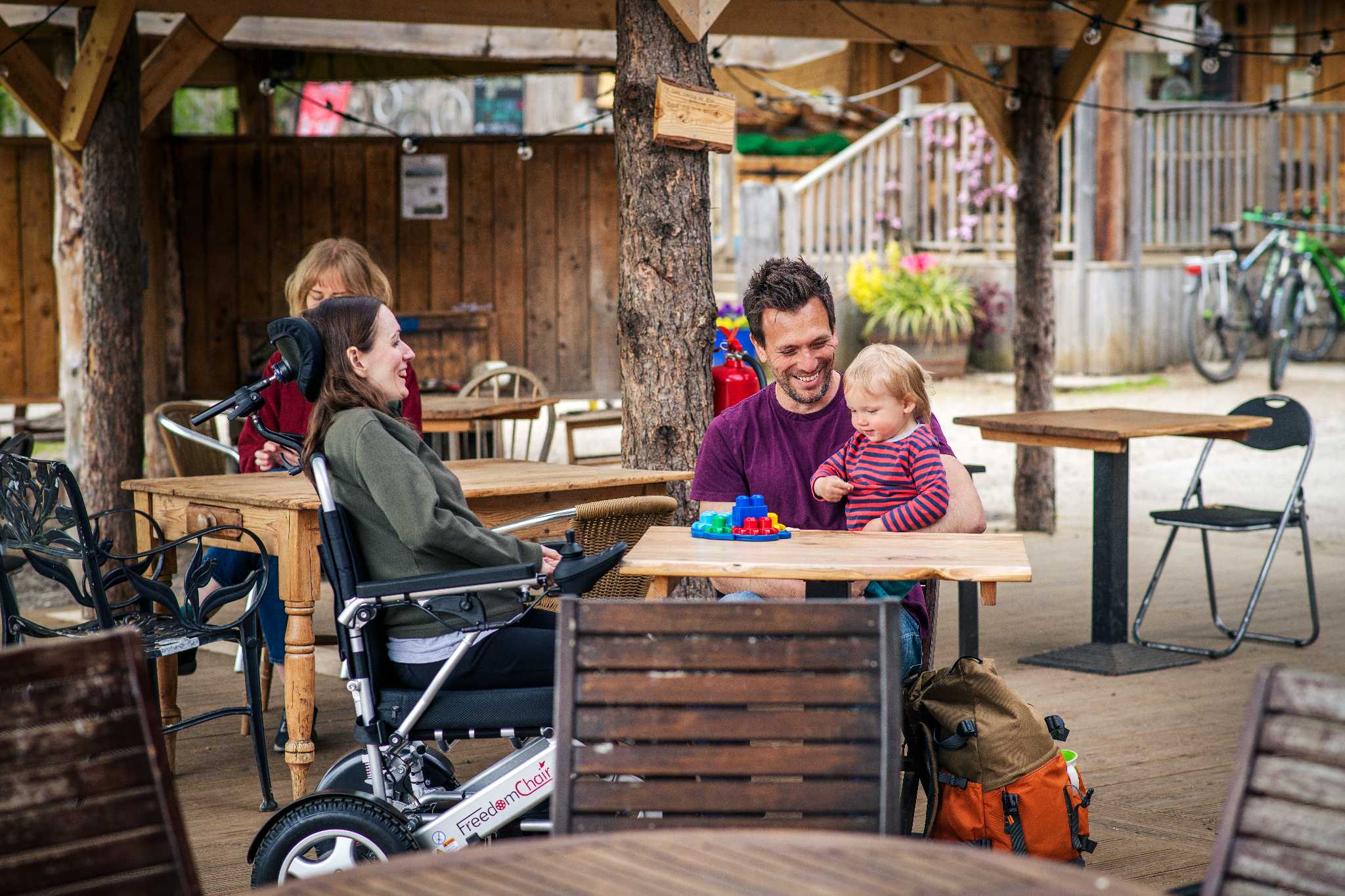
Tomnah's Market Garden, Comrie Croft
Food and drink establishments
- Ensure there is space for wheelchair access through the dining room and at the tables.
- Check if the tables are at the right height for a wheelchair user – the recommended clearance between the underside of a table and the floor is 700 mm.
- Use table blocks to increase table heights if necessary.
- Facilitate requests for a quieter table or table near the bathroom.
- If you don’t provide table service as standard, offer it on request instead.
- Provide large print menus – the recommended minimum font size is 16 with a clear font such as Arial.
- Make sure all dietary information is available and its clear what diets and requests you can cater for.
- Offer easy-grip cutlery, dual-handled mugs, beakers and straws.
- Make the tableware visually contrasting.
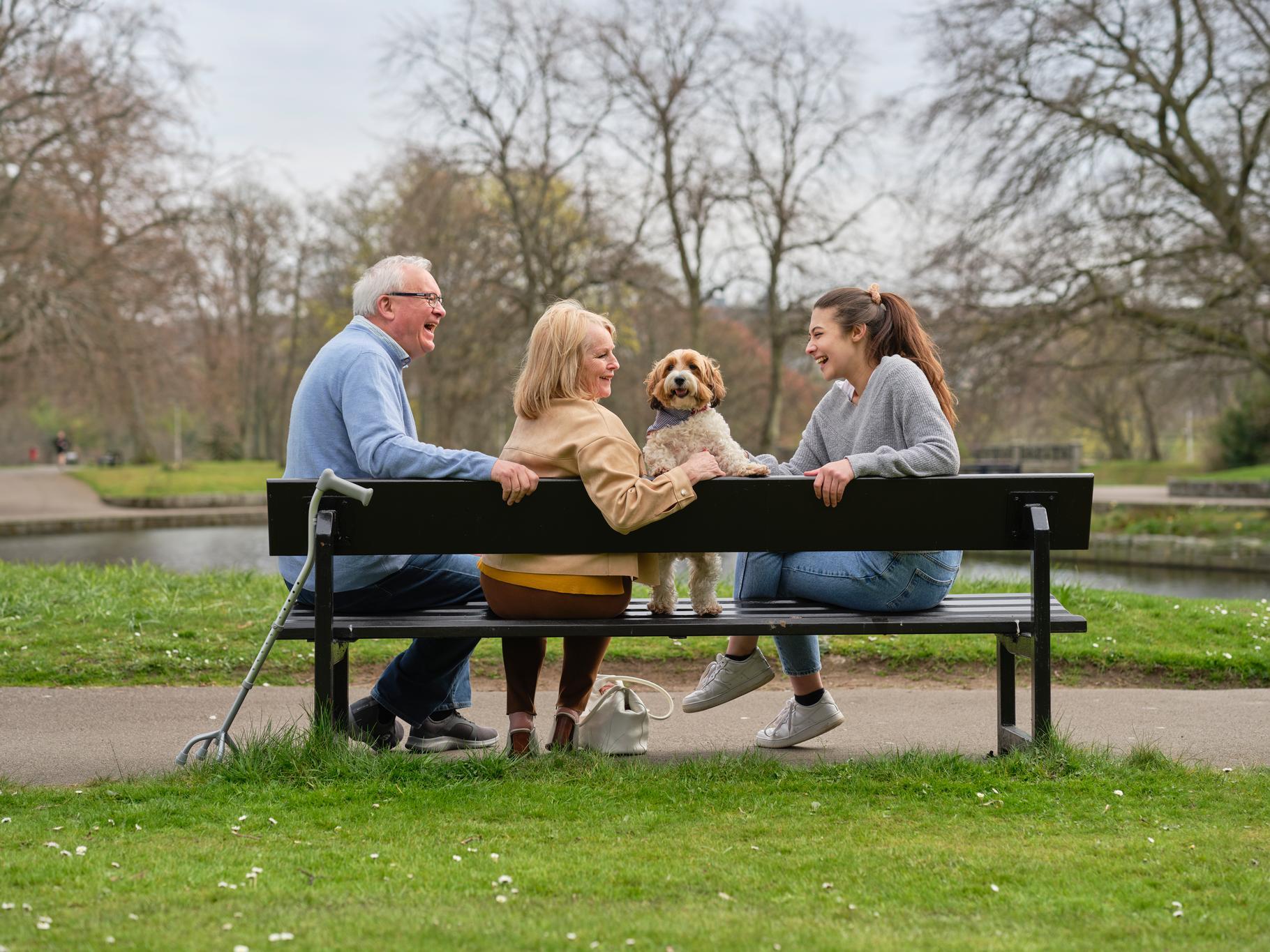
A really key thing for me is keeping walkways clear: tables and chairs left all over the place in a restaurant makes it so tricky for me and ‘A’ boards are disastrous – they are not my friends at all!
Pat Taylor
Blind customer
Visitor attractions and experiences
- Offer a flexible family ticket – groups could include other family members such as grandparents, so consider that they may be looking for other options beyond the standard 2 adults and 2 children.
- Provide free tickets for essential companions or carers. Be clear about what evidence you require to authenticate the request, eg an Access Card or or Carer's Card.
- Offer a short free familiarisation visit – this can help allow people to become familiar and comfortable with your venue ahead of a bigger trip.
- Offer quiet times or sessions with a reduced capacity and limited sensory interactions – eg some lights and music is lower or switched off.
- Offer the option to fast track or remote queue (eg via an app).
- Offer object handling where appropriate, allowing blind or partially sighted people to explore historical or replica items, staging, props, costumes and more.
- Provide a sensory kit or backpack – this might include ear defenders, fidget toys or weighted blankets. These can be helpful for children and neurodivergent people.

Duthie Park
© VisitScotland / Kate Abbey
Activity providers
- Provide adapted equipment so disabled customers can participate – this could be a bike, boat, zip wire, play equipment and more.
Outdoors
- Some picnic benches should have an extended top for wheelchair users.
- Provide a variety of seating – perch seats or large stones, benches with arms, space for wheelchairs, and somewhere with shade and shelter.
- Provide children’s play equipment which is accessible, such as level access rounabouts or wheelchair accessible swings.
Find out more about providing inclusive play for all children on the Sensory Trust website.
Temporary event venues often seem to plan where the wheelchair accessible viewing platform is going to go before knowing where the sound desk or cameras are going to go – meaning that we sometimes end up with a poor view.
Sylvia Tooley
Wheelchair user
Events
- Provide a dedicated viewing area with step-free access which is suitable for wheelchair users or others that need to sit, offering an optimal vantage point for performances.
- Create temporary paths between key areas if it is likely to be muddy or the ground is uneven, particularly for wheelchair users who may need to move between an accessible viewing area and the accessible toilets.
- Paths can be created using temporary tracking mats – ensure path joints are smooth and level to avoid creating any trip hazard.
- Entry onto and exit from temporary pathways should be step fee.
- Provide British Sign Language interpreters for live performances.
- Offer relaxed performances at certain times – this could be increased lighting, reduced noise, allowed own food, no seating reservations, or allowing people to move around during the performance.
- Make sure any buggies or minibuses used to transport customers around your venue are wheelchair accessible.
Accommodation
Room options
- Offer an allergy-free room – this may be an animal-free, no smoking room with hypoallergenic bedding, no carpets, a window that can be opened, air-purifier, and perfume-free cleaning products.
- Offer a choice of twin or double bed options in wheelchair accessible rooms.
- Offer a ground floor bedroom with an en-suite bathroom.
- Provide an adjoining bedroom to a wheelchair-accessible room.
- Any TVs should have subtitles or audio description available.
Provide simple instructions on how activate TV subtitles or audio description, or alternatively, offer to activate these functions for your guests.
Grant Arms Hotel
© VisitScotland / Allan Myles
During the stay
- Provide somewhere for people to sit and complete paperwork if required – this could be done on a tablet, allowing people to read and sign electronically.
- Make assistance available for customers 24/7.
- Make sure customers know what support is available free of charge – this might be: bath seats, toilet seat raisers, shower chairs, waterproof mattress protectors. You may also want to have the ability to hire other specialist equipment from a local supplier.
- Have bed blocks on standby so you can raise the height of beds if required.
- Room service should be available by phone and a text-based system.
- Provide meals in rooms if required.
Within the room
- Provide a vibrating pillow alarm, strobe light, or domestic paging system for deaf visitors in an emergency situation.
- Install an emergency assistance alarm in the accessible bedroom and bathroom.
- Provide a fridge for storing food, drink and any medication.
- Provide an electric profiling bed – these are split into sections which can be manually or electronically moved and adjusted to suit each customer’s needs.
- Leave space for wheelchairs or make it possible for furniture to be easily adjusted to make space.
- Make sure the lighting is easily adjustable by the customer.
- Windows should be accessible and easy to operate.
- Install black-out curtains or blinds in bedrooms.
- Make sure housekeeping staff know not to move furniture or personal items during the stay.
We need to know the place we are visiting has a flashing fire alarm to tell us when there is a need to evacuate. For hotels, we also need to know whether a ‘vibrating pillow pad’ is available in the room which will vibrate and alert us if the fire alarm goes off.
Caroline, Jane and Janet
Customers with hearing loss
Self-catering
- Ensure key boxes are accessible and well-lit.
- Store heavy or frequently used equipment in lower cupboards so it is easier to reach.
- Provide a visually contrasting kettle and toaster.
For more guidance request a copy our inclusive design factsheet on kitchen facilities.
Camping, caravans, etc
- Make sure the accessible bathroom, toilet and parking is within 50 metres of the pitch.