


:

    • All Advice and support

      Start your business

      • All Start your business
      • Legislation
      • Measure your progress
      • Pricing strategies
      • Set up a business

      Improve your business

      • All Improve your business
      • Create an inclusive business
      • Deliver a quality experience
      • Partner support opportunities
      • Understand your customers

      Grow your business

      • All Grow your business
      • Funding opportunities
      • Online booking systems
      • Reach new markets
      • Sell with travel partners

      Promote your business

      • All Promote your business
      • Create good content
      • Manage your social media
      • Manage your website
      • Marketing opportunities

      Sustainability

      • All Sustainability
      • Create a climate action plan
      • Improve your sustainability
      • Measure your climate impact
      • Net zero and sustainability
      • Promote responsible tourism

      Support by sector

      • All Support by sector
      • Accommodation
      • Active and outdoor
      • Events and festivals
      • Food and drink
      • Visitor attractions
  • Training and events
  • Contact us
  1. Home
  2. Advice and support
  3. Improve your business
  4. Create an inclusive business
  5. Inclusive business improvements
  6. Inclusive design

Inclusive design

5 minute read• Last updated: 7 July 2026

Inclusive design ensures that everyone of any age, ability and background can access and enjoy the same spaces and services. It’s about thoughtful, flexible, and creative solutions that make your tourism or event business welcoming and usable for as many customers as possible.

Instead of simply meeting accessibility requirements, inclusive design goes beyond regulations, considering real-world needs and experiences.

If you are considering improving the accessibility of your business, take a look at these core principles of inclusive design, practical steps to make that happen, and check whether your key features already meet best practice. This guidance has been prepared by our partners at AccessAble.

In this article:

  • Core principles of inclusive design
  • Factors to consider
  • Practical ways to improve inclusion
  • Inclusive design in action
  • Take expert advice and guidance
  • Request our inclusive design factsheets

Core principles of inclusive design

  • Easy to use and adaptable

    Spaces should be simple and intuitive to navigate, requiring minimal effort. Whether someone is walking, using a wheelchair, pushing a stroller, or carrying bags, the environment should not create unnecessary challenges. Designs should be versatile, adjusting to different needs over time without requiring major changes.

  • Logical, safe and clear layouts

    People should feel confident and secure when moving through a space. Logical layouts with clear sightlines reduce confusion, minimize the need for excessive signage, and promote independence. This principle helps everyone, including those with mobility challenges, visual impairments, or cognitive differences.

  • Enjoyable and comfortable for all

    Inclusive environments focus on physical, sensory, cognitive, and social needs. This means considering textures, lighting, seating, sound levels, and other factors that affect how people experience a space. Thoughtful design ensures that everyone can move freely and comfortably, whether they have a disability, are elderly, or are navigating with a young child.

Factors to consider

  • Going beyond accessibility

    Inclusive design is more than just meeting legal requirements, it's about proactive problem-solving. Regulations create a baseline, but great design comes from considering real-life use cases and finding creative solutions. Instead of checking a box for compliance, designers should think holistically to improve experiences for everyone.

  • Management and maintenance

    Even a well-designed space can become less accessible over time due to:

    • wear and tear (cracked paths, broken lifts, faded signage)
    • seasonal changes (icy walkways, muddy paths, glare from sunlight)
    • shifting user needs (rising use of electric mobility scooters or changing family dynamics)

    Regular assessment and maintenance keep spaces truly inclusive. Small updates, like keeping pathways clear, ensuring automatic doors function, or improving lighting, can make a significant difference.

  • Inclusivity through choice

    People engage with spaces differently whether they:

    • prefer independent exploration
    • visit with family, friends, or in groups
    • have mobility requirements

    Providing clear information about accessibility options, such as step-free routes, seating choices, and restroom facilities, empowers people to choose how they experience a space.

Practical ways to improve inclusion

If a space needs improvement, here are simple yet effective steps to take.

  • Perform an accessibility audit

    Assess barriers and see what can be fixed or improved.

  • Enhance pathways and entrances

    Ensure that surfaces are smooth, wide enough, and well-lit.

  • Upgrade signage and information

    Use large, high-contrast text and universal symbols and pictograms to make navigation easier.

  • Consider sensory needs

    Avoid harsh lighting, excessive noise, or unclear layouts that may cause discomfort.

  • Provide flexible seating and facilities

    Offer adjustable seating, baby-changing areas, prayer rooms, and gender-neutral (universal) restrooms.

Inclusive design in action

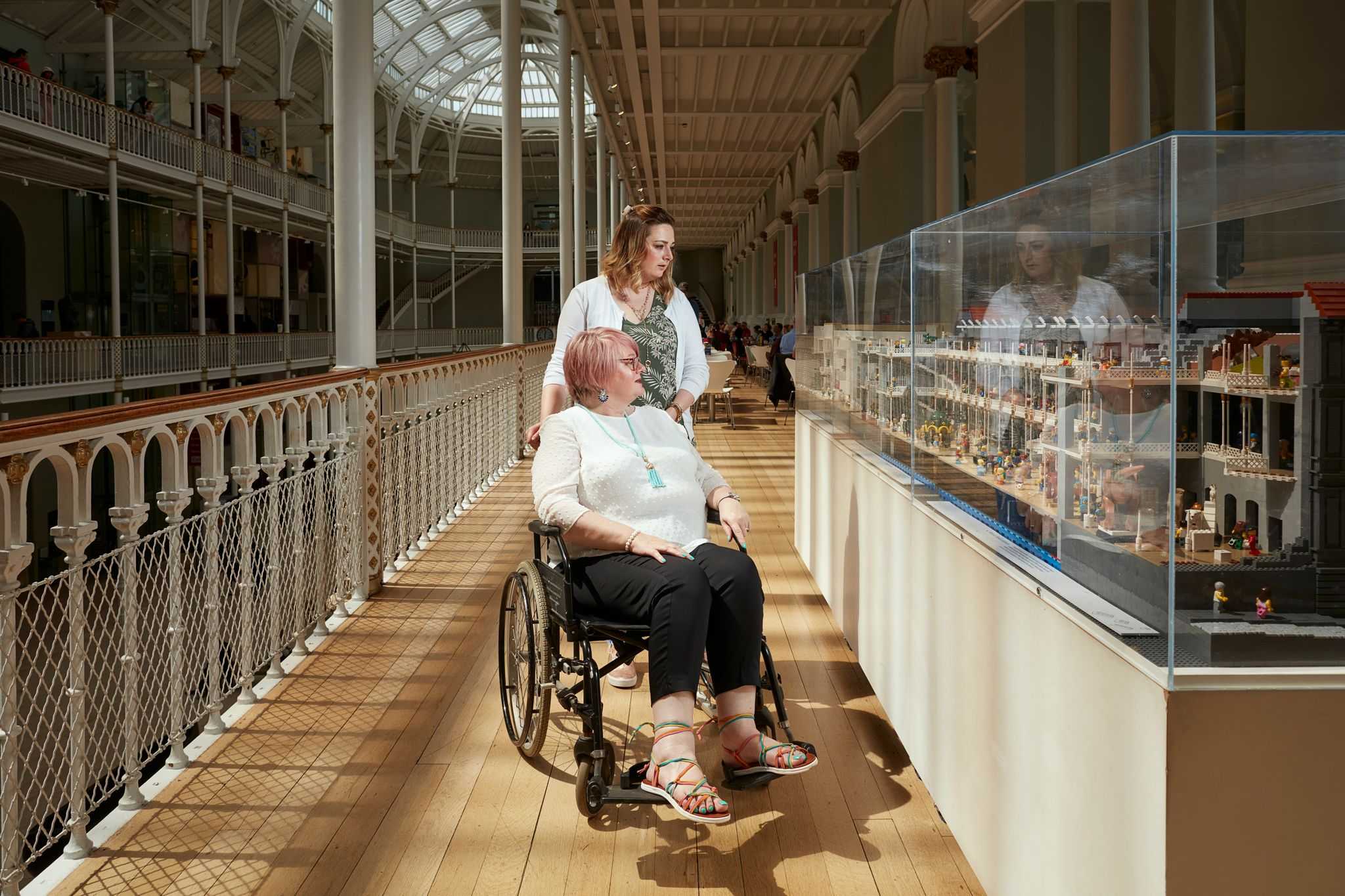
A woman standing and a woman in a wheelchair look at a museum exhibit.

National Museum of Scotland

© VisitScotland / Peter Dibdin

Many organisations use structured processes, like the RIBA Inclusive Design Overlay, to ensure accessibility is considered throughout building and renovation projects.

For example:

  • Early planning stages involve consulting diverse stakeholder groups to understand real needs.
  • Design phases integrate inclusive solutions, such as step-free access or adaptable layouts.
  • Construction and post-occupancy reviews help ensure ongoing inclusivity as spaces evolve.

Take expert advice and guidance

Inclusive design is about people, not just regulations. It's a creative and practical approach that enhances everyday experiences, making spaces welcoming, adaptable, and enjoyable for all.

But it is essential to ensure that any interpretation of inclusive design principles doesn’t undermine the ability of Building Warrant Officers or Building Regulations Approvers to ensure regulatory compliance at a later and more detailed design stage.

About this information

AccessAble’s consultancy team has prepared this general guidance information for VisitScotland. Although both organisations have taken steps to ensure the information is accurate and up-to-date, we can’t guarantee it covers every legal requirement for your individual business. Details and drawings included aren’t tailored to specific sites, projects, or events, so they may not be the perfect fit for your needs. 

To make sure you’re on the right track, please seek professional advice from an architect or inclusive design specialist before implementing any action based on this guidance. This guidance isn’t meant for procurement purposes or obtaining planning permissions. 

Some key references

Building Standards Technical Handbook (Non Domestic)

Provides guidance on achieving the standards set in the Building (Scotland) Regulations 2004.

External website
Guide

Inclusive Design Overlay for RIBA Plan of Work

Provides guidance on implementing inclusive design through each Royal Institute of British Architects Plan of Work stage.

External website
Guide

Electric Vehicles Accessible Charging Specifications

PAS 1899:2022 provides specifications to support the building of an inclusive electric vehicle charging infrastructure in the UK.

External website
Guide

Design for the Mind. Neurodiversity & the Built Environment

PAS 6463:2022 provides guidance on the design of the built environment for a neurodiverse society, to make places more inclusive for everyone.

External website
Guide

Fire Safety: Evacuating disabled people from buildings

Practical guidance from GOV.Scot for the emergency evacuation of disabled people

External website
Guide

AccessAble

Accessible venue information for customers and opportunities for businesses to obtain a Detailed Access Guide.

External website
Partner website

Royal National Institute of Blind People (RNIB)

RNIB offer training and other advice services to help businesses become accessible for people with sight loss.

External website
Guide

Deaf Action

Deaf Action can advise businesses on equipment and adaptions to better cater for deaf customers.

External website
Guide

Request our inclusive design factsheets

Exterior of wooden lodge, a girl in a wheelchair is pushed along decking surface while a younger child runs ahead

The Green House, Ettrickbridge

© VisitScotland / Luigi Di Pasquale

Inclusive design factsheets (created by AccessAble’s consultancy team) are available on request.

There are 18 factsheets in total, covering a range of key business areas, such as exterior routes and approaches, entrances, corridors, sleeping areas, toilets, bathrooms and changing areas, cafés and restaurants and more. They offer lots of useful guidance on inclusive design when it comes to the use and navigation of your business.

Request our inclusive design factsheets

Related pages

Inclusive business improvements

Read our four steps to making your business more inclusive. Including what the process is, and how to implement each step to your business.
How-to
9 minute read

Understanding inclusivity

Discover why inclusivity matters to a tourism or event business and the benefits of improving your offer for the accessible tourism market.
Article
6 minute read

Inclusive and accessible events

Find out more about the importance of social inclusion and how you can make your event more accessible and enjoyable for all.
Article
5 minute read

Understand accessible customers

Learn about some of the different accessibility requirements some tourism and event customers have and some of the challenges they encounter.
Guide
15 minute read

Sign up for the latest advice

Sign up for the Business Support monthly newsletter to get the latest advice and tips straight to your inbox. We’ll keep you informed with up-to-date insights, case studies and best practice guides to help you start, improve or grow your business.
Get the Business Support newsletter

About us

  • Policies
  • Accessibility
  • Cookies
  • Website feedback
  • Glossary of terms

Our other sites

  • Business Events
  • Corporate
  • Asset Library
  • Travel Trade
  • Brand Scotland
  • VisitScotland.com

Find us on

Find us on

Brand Scotland

© 2026 VisitScotland. All rights reserved.